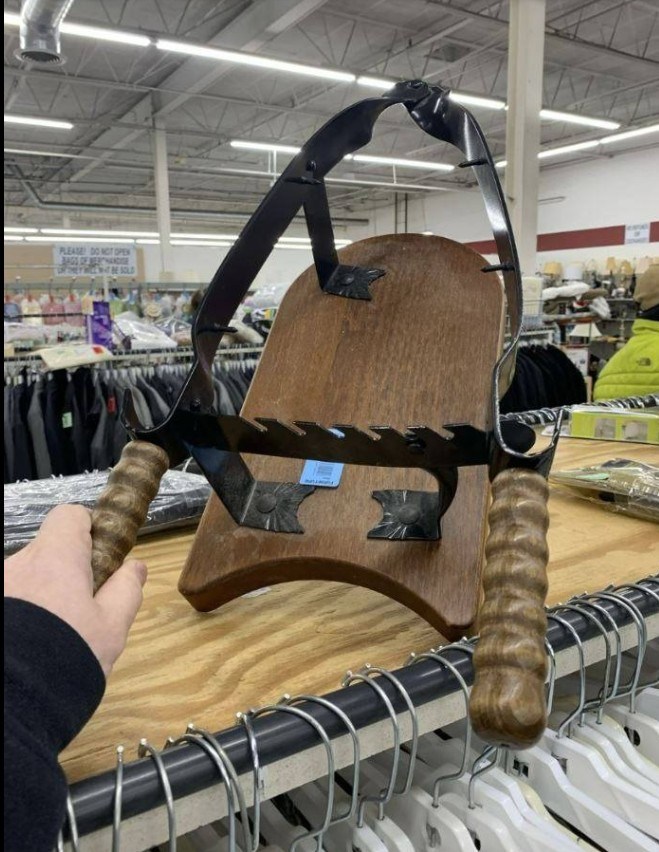
In Nonna’s kitchen, it wasn’t just a tool—it was a throne.
Perched atop a simple wooden stand, the whole leg of prosciutto wasn’t merely meat—it was heritage, patience, and artistry made visible. With each paper-thin slice shaved off by her steady hand, Nonna wasn’t just serving food—she was passing down centuries of Mediterranean wisdom, one delicate curl at a time.
The prosciutto stand—often overlooked as mere kitchenware—is anything but ordinary. It’s a silent witness to history, a bridge between ancient preservation and modern celebration, and a symbol of how food binds us across generations.
More Than a Holder—It’s a Legacy
While it may look like a humble rack, the prosciutto stand (or tagliere per prosciutto) is a masterpiece of function and form:
Stability: Angled to hold the heavy leg securely during precise slicing
Ergonomics: Designed so the slicer stands comfortably, arm relaxed, blade gliding parallel to the bone
Tradition: Crafted from olive wood, beech, or walnut—materials that resist moisture and honor the land
This isn’t just about convenience. It’s about respect—for the animal, the craft, and the people gathered around the table.
Roots in Antiquity:
Roots in Antiquity
The story begins with necessity.
As early as Roman times, salt-curing pork legs was a method of survival—preserving protein through lean months. In regions like Parma, Italy, and Jabugo, Spain, this practice evolved into an art form, yielding hams aged for 12, 24, even 36 months.
But a whole cured leg is unwieldy. Enter the stand:
Medieval butchers and home cooks needed a way to secure the ham while slicing it thinly—without waste, without danger, and without losing the precious fat that carries so much flavor.
By the 19th century, the prosciutto stand was a fixture in European homes and markets—a quiet emblem of self-sufficiency and culinary pride.
A Centerpiece of Community
In Mediterranean culture, food is never solitary.
The prosciutto stand invites gathering. At weddings, festivals, and Sunday lunches, it sits proudly on the table—not hidden in the kitchen—beckoning guests to slice, share, and savor together.
There’s something deeply human about watching someone carve ham by hand: the rhythmic motion, the glistening slices, the shared anticipation. It turns eating into ritual.
For Italian and Spanish immigrants, bringing a prosciutto stand to a new country wasn’t just practical—it was an act of cultural preservation. In a foreign land, that wooden rack became a piece of home, a way to say: “This is who we are. This is how we love.”
Why It Still Matters Today
Continued on the next page
Read more