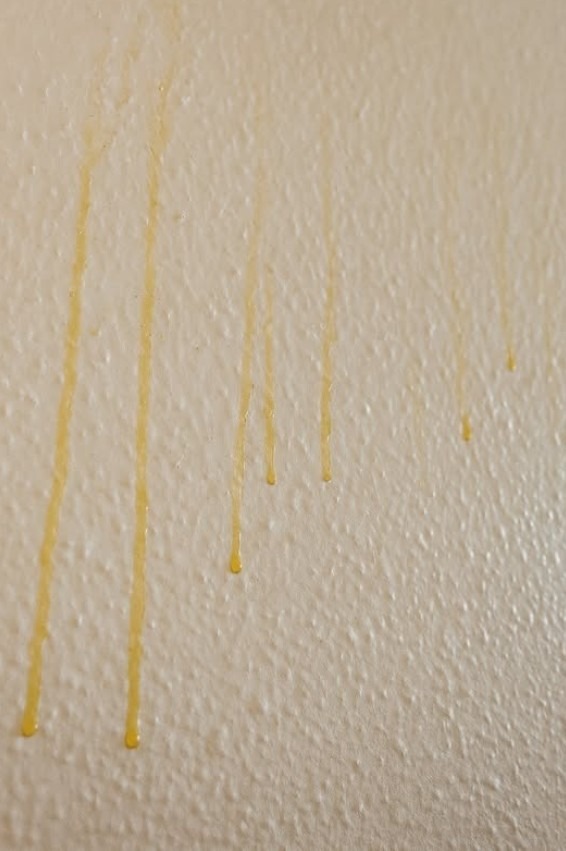
Seeing yellow streaks or droplets on your bathroom walls can be alarming—but it’s usually not a sign of something dangerous. More often, it’s a combination of soap scum, hard water minerals, mold, or even nicotine residue reacting with moisture and time. Let’s break down the most likely causes—so you can clean it safely and prevent it from coming back.
🚿 Top 4 Causes of Yellow Drips or Stains
1. Soap Scum + Hard Water Buildup
What it is: A mix of soap residue, body oils, and minerals (like calcium and magnesium) from hard water. Over time, this film oxidizes and turns yellow or brown, especially near showers or sinks.
Where it appears: On tiles, grout, glass doors, or painted walls near water sources.
Texture: Sticky, waxy, or crusty.
✅ Fix: Scrub with a paste of baking soda + vinegar or use a commercial lime/soap scum remover. Rinse well.
2. Pink or Yellow Mold (Actually Bacteria!)
What it is: Serratia marcescens—a common airborne bacteria that thrives in damp, humid bathrooms. It starts pink or orange but can turn rusty yellow or brown as it ages.
Where it appears: Around drains, faucets, shower curtains, or tile grout.
Why it happens: High humidity + soap residue = perfect breeding ground.
✅ Fix: Spray with undiluted white vinegar or a bleach solution (1 part bleach : 10 parts water). Let sit 10 mins, then scrub.
⚠️ Never mix bleach and vinegar—toxic fumes!
3. Nicotine or Candle Soot Residue (If You Smoke or Burn Candles)
What it is: In homes where smoking occurs indoors or lots of candles/incense are burned, sticky tar or soot can coat walls. When mixed with bathroom humidity, it drips and yellows over time.
Where it appears: Upper walls, ceilings, or near vents—even far from the shower.
Texture: Greasy or tacky.
✅ Fix: Wash with TSP (trisodium phosphate) or a degreaser like Krud Kutter. Repaint with stain-blocking primer if needed.
4. Leaking Pipes or Roof Moisture + Rust
What it is: If you have old iron pipes or metal fixtures above the wall, rust-colored water can leak through and leave yellow-orange streaks.
Where it appears: Ceiling-to-wall corners, behind toilets, or near plumbing.
Clue: Stains reappear quickly after cleaning, or you notice a musty smell.
✅ Fix: Investigate for leaks. Call a plumber if you suspect pipe corrosion.
🧼 How to Clean Yellow Stains Safely
Continued on the next page
Ventilate the room (open window or run fan).
Identify the cause (see above).
Test cleaners in a small area first—especially on painted walls.
For most cases:
Spray white vinegar, let sit 10 mins, scrub with soft brush.
For tough buildup: Make a paste of baking soda + hydrogen peroxide, apply, wait 15 mins, then rinse.
Dry thoroughly after cleaning to prevent regrowth.
🔒 Prevention Tips
Run the exhaust fan during and 20–30 minutes after showers.
Wipe down walls weekly with a squeegee or microfiber cloth.
Use liquid soap instead of bar soap (less scum).
Install a water softener if you have hard water.
Replace shower curtains regularly or use mildew-resistant liners.
❤️ When to Worry
Call a professional if:
Stains are spreading rapidly or have a musty, earthy odor (possible hidden mold).
You see bubbling paint or warped drywall (sign of water intrusion).
You have respiratory symptoms (coughing, wheezing) that worsen in the bathroom.
The Bottom Line
That yellow drip is likely just soap, minerals, or harmless bacteria—not a health emergency. With proper cleaning and better ventilation, you can banish it for good.
“A clean bathroom isn’t about perfection—it’s about care, consistency, and fresh air.” 🌬️✨
So grab your vinegar, open a window, and tackle it with confidence. Your walls will thank you!
