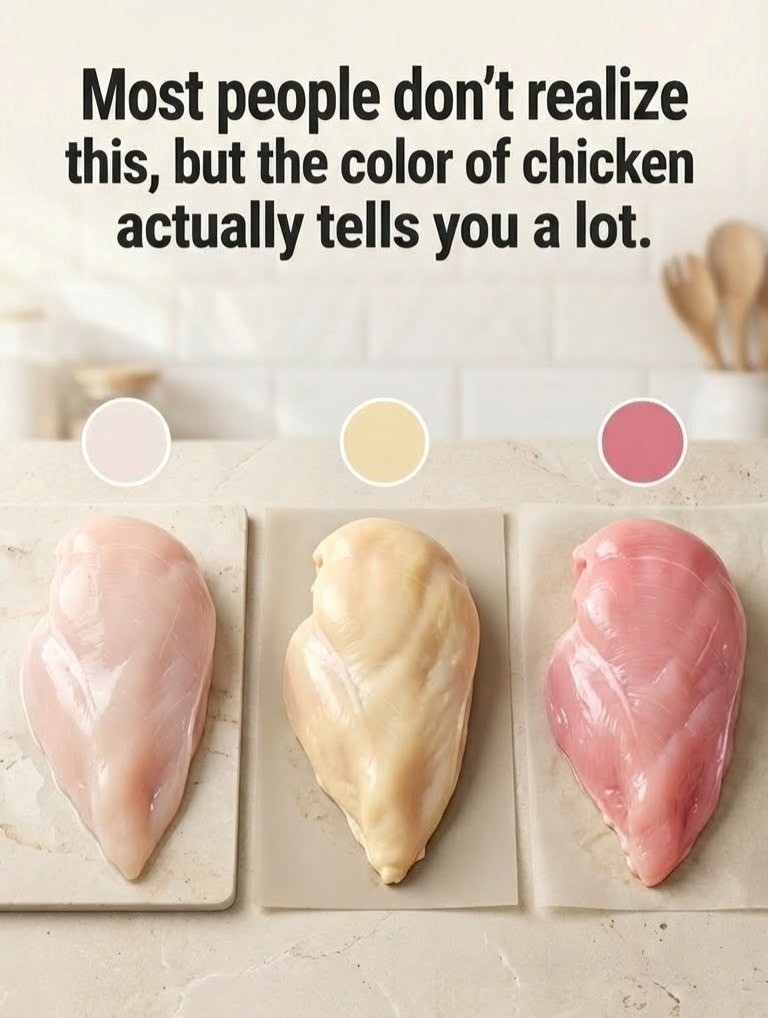
Walk down the poultry aisle of any supermarket and you’ll see it immediately: chicken breasts in shades ranging from pale pink to deep rosy red, thighs that look almost purple, yellowish skin on whole birds, and occasionally gray or oddly translucent patches that make shoppers pause.
Color is one of the first things people judge when buying chicken. And understandably so — we’re taught to associate color with freshness, safety, and quality. Pink seems good. Gray seems bad. Yellow raises questions. Red veins cause concern.
But here’s the truth:
Chicken color alone does not tell you whether it’s fresh, safe, or high quality.
In fact, many perfectly safe, high-quality chickens look “wrong” to shoppers — while some visually appealing ones are anything but special.
Let’s break down what chicken color actually means, what it doesn’t mean, and how to tell quality apart from illusion.
Why We Judge Meat by Color
Humans evolved to assess food visually before modern refrigeration or labeling existed. Color was a survival cue.
- Bright, natural tones = likely fresh
- Gray or green = potential spoilage
- Uniform appearance = perceived safety
That instinct hasn’t disappeared — even though modern meat production has changed everything.
Chicken today:
- Is chilled rapidly
- Often packaged with oxygen control
- May be frozen and thawed
- Is processed under lighting that alters perception
So our instincts aren’t wrong — but they’re often misapplied.
What “Normal” Chicken Color Actually Is
Raw chicken is naturally pale.
Unlike beef, chicken contains very little myoglobin, the protein that gives red meat its deep color. That’s why chicken breasts are light pink or off-white, while thighs and legs are darker.
Normal Raw Chicken Colors Include:
- Pale pink
- Creamy white
- Light peach
- Slightly translucent
These variations are normal — not warning signs.
Why Some Chicken Is Darker Than Others
One of the biggest myths is that darker chicken automatically means better quality.
Here’s what actually affects color.
1. Muscle Type (White Meat vs Dark Meat)
Dark meat (thighs, legs) works harder than breast meat. More activity = more myoglobin.
That’s why:
- Thighs look darker
- Drumsticks sometimes look purplish
- Legs stay darker even after cooking
This is normal and expected.
2. Oxygen Exposure
When chicken is exposed to air:
- Myoglobin reacts with oxygen
- Color can deepen slightly
- Meat may look redder or pinker
Vacuum-sealed chicken often looks dull or grayish at first. Once opened, it may “bloom” and change color within minutes.
That doesn’t mean it was bad — it means oxygen did its job.
3. Temperature and Freezing
Chicken that has been frozen and thawed may appear:
- Slightly darker
- More translucent
- Uneven in color
Freezing damages muscle cells, releasing water and altering how light passes through the meat. The color change is cosmetic, not dangerous.
4. Age of the Bird
Older birds have:
- More developed muscles
- Slightly darker meat
- More pronounced color variation
This doesn’t indicate lower quality — just maturity.
The Yellow Chicken Myth
One of the most common beliefs is that yellow chicken is “better” or “more natural.”
The reality is more complicated.
Why Some Chicken Skin Is Yellow
Yellow skin comes from diet, not quality.
- Corn and marigold pigments add yellow tones
- Grass or grain-based feed influences skin color
- Genetics also play a role
In many countries, yellow skin is preferred because it looks farm-raised or traditional.
But nutritionally and safely?
Yellow skin does not mean better chicken.
White Skin Isn’t Inferior
White-skinned chicken:
- Often comes from wheat-based feed
- Is common in the U.S. and Europe
- Is just as safe and nutritious
Skin color is an aesthetic preference, not a quality marker.
Red Spots, Veins, and Bloody Patches: Should You Worry?
Seeing red spots or veins in raw chicken is one of the biggest triggers for concern.
Let’s clear this up.
What Those Red Spots Actually Are
They’re usually:
- Broken capillaries
- Residual bone marrow
- Blood vessels visible through thin muscle
During processing, some blood vessels rupture — especially near joints and bones.
This is:
- Common
- Safe
- Not a sign of spoilage
Cooking destroys any remaining blood cells.
Bone Marrow Confusion
Sometimes cooked chicken looks pink near the bone. This often alarms people.
This happens because:
- Bone marrow pigments leach into surrounding meat
- Young birds have porous bones
- Freezing increases pigment migration
Pink near the bone does not mean undercooked if the internal temperature is safe.
Gray or Dull Chicken: Always Bad?
Not necessarily.
Grayness can come from:
- Vacuum packaging
- Lack of oxygen
- Cold temperatures
Once exposed to air, the meat often lightens.
However…
Gray + Slimy + Smelly = Not Safe
Color alone doesn’t condemn chicken — but color combined with texture and odor does.
Trust the trio:
- Appearance
- Texture
- Smell
What Truly Indicates Spoiled Chicken
Forget color for a moment. Spoilage shows up in other ways.
Signs Chicken Has Gone Bad
- Strong sour or sulfur smell
- Slimy or sticky texture
- Green or iridescent sheen
- Excessive gas in packaging
If chicken smells bad, do not cook it — no matter the color.
Why Some Chicken Looks “Too Perfect”
Ever notice how uniform supermarket chicken looks?
That’s not accidental.
Modern Processing and Appearance Control
Supermarkets use:
- Modified-atmosphere packaging
- Strategic lighting
- Tight trimming standards
This creates:
- Consistent size
- Uniform color
- Clean appearance
It doesn’t mean the chicken is fresher — it means it’s market-ready.
The Role of Water in Chicken Color
Many chicken products are “enhanced” with added water or brine.
This can make meat appear:
- Paler
- Plumper
- Slightly translucent
Added water affects texture and color — not safety.
Does Organic or Free-Range Chicken Look Different?
Sometimes — but not always.
Organic or pasture-raised chicken may show:
- More color variation
- Slightly darker meat
- Less uniform appearance
But color overlap is huge. You cannot reliably identify organic chicken by color alone.
Why Cooked Chicken Color Causes So Much Confusion
Raw chicken color is confusing — cooked chicken color is worse.
Pink Chicken Isn’t Always Undercooked
Cooked chicken can appear pink due to:
- Bone marrow pigments
- Nitrites in feed or processing
- Smoke exposure
- Freezing before cooking
The only reliable safety measure is temperature.
Chicken is safe at 165°F (74°C) — regardless of color.
Why Overcooked Chicken Looks White and Dry
When chicken cooks:
- Proteins denature
- Moisture is expelled
- Light reflects differently
Overcooked chicken becomes opaque, white, and dry — which many people mistake for “safe.”
Ironically, this texture often signals quality loss, not safety.
Cultural Preferences Shape Expectations
Different cultures expect chicken to look different.
- Some prefer yellow skin
- Some prefer dark meat
- Some value firmer texture over pale tenderness
There’s no universal “right” color — only learned preference.
Marketing Has Trained Our Eyes
Packaging, lighting, and labeling teach us what chicken should look like.
When real food deviates, we assume something is wrong — even when it isn’t.
This disconnect fuels waste, fear, and misinformation.
How to Actually Judge Chicken Quality
Instead of relying on color alone, look at:
1. Smell
Fresh chicken smells neutral or slightly meaty — never sour.
2. Texture
It should be moist but not slimy.
3. Packaging Integrity
Avoid leaking, bloated, or damaged packaging.
4. Dates and Storage
Check sell-by dates and keep chicken cold.
5. Source Transparency
Clear sourcing and labeling matter more than shade.
Why Chicken Color Myths Persist
- Visual instincts are powerful
- Misinformation spreads easily
- Food education is limited
- Marketing simplifies complex realities
Color feels intuitive — but biology rarely is.
The Bottom Line
Chicken color is influenced by:
- Muscle type
- Diet
- Oxygen exposure
- Freezing
- Age
- Processing
It is not a reliable indicator of:
- Safety
- Freshness
- Nutritional value
- Ethical treatment
Understanding this allows you to shop with confidence — not fear.
Final Thoughts: Trust Knowledge Over Appearance
Chicken doesn’t need to look perfect to be good.
Nature is variable. Food is biological. Uniformity is often artificial.
When you stop judging chicken solely by color, you:
- Waste less food
- Cook with more confidence
- Make better buying decisions
And perhaps most importantly — you stop letting appearance override understanding.
