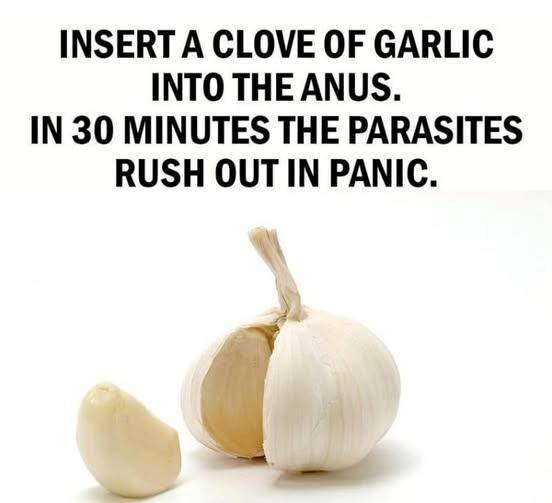
Every so often, a health claim circulates that makes people pause and ask, “Wait… is that actually a thing?” One of the most persistent—and alarming—examples is the idea that placing garlic in the anus can kill intestinal parasites.
It sounds shocking. It sounds ancient. It sounds like something whispered in online forums or passed down as “folk wisdom.” And for people dealing with the uncomfortable, often embarrassing reality of parasites—especially pinworms—the promise of a simple, natural fix can feel incredibly tempting.
But does it work?
Is it safe?
And why does this myth refuse to disappear?
Let’s break it down calmly, clearly, and honestly.
The Short Answer
No. Putting garlic in the anus does not safely or effectively treat parasites.
It can cause irritation, burns, infection, and delayed proper treatment—especially in children.
The longer answer is more interesting—and important.
Why People Believe Garlic Kills Parasites
Garlic has been used medicinally for thousands of years. Ancient civilizations—including the Egyptians, Greeks, Chinese, and Indians—used garlic for infections, digestive issues, and general health.
Modern science supports some of garlic’s benefits:
- Antibacterial properties
- Antifungal effects
- Mild antiparasitic activity when ingested in controlled forms
- Cardiovascular and immune support
So the idea didn’t come from nowhere. Garlic does contain allicin, a sulfur compound with antimicrobial effects.
The problem isn’t garlic itself.
The problem is how people think it works.
How the Myth Likely Started
The “garlic in the anus” idea likely came from a combination of:
- Folk medicine traditions
- Misunderstood parasite biology
- Desperation for quick, private remedies
- Internet amplification
Pinworms, in particular, tend to exit the anus at night to lay eggs, causing itching. That visible activity led to the assumption that topical treatments—rather than systemic ones—could solve the problem.
Add garlic’s reputation as a “natural antibiotic,” and the myth took root.
What Actually Happens When Garlic Touches Skin
Garlic is not gentle.
When applied directly to skin—especially sensitive skin—it can cause:
- Chemical burns
- Severe irritation
- Blistering
- Inflammation
- Secondary infections
This is well-documented in medical literature. Even garlic poultices placed on the foot or chest have caused burns. The anus and rectum are far more sensitive.
Putting garlic there can damage tissue, disrupt the natural barrier, and make infection more likely, not less.
Why Garlic in the Anus Doesn’t Kill Parasites
Let’s look at the biology.
1. Parasites Live in the Intestines
Most intestinal parasites—including pinworms, roundworms, and hookworms—live inside the intestinal tract, not just at the exit.
Garlic placed externally:
- Does not reach the intestines
- Does not affect adult worms living higher up
- Does not eliminate eggs throughout the gut
At best, it might irritate parasites near the opening—while also irritating the person.
2. Allicin Isn’t Absorbed That Way
The antimicrobial compounds in garlic:
- Are unstable
- Break down quickly
- Require digestion and metabolism to have systemic effects
The rectum does not magically absorb garlic compounds in a way that treats parasitic infections.
3. Parasite Life Cycles Are Complex
Effective parasite treatment must:
- Kill adult worms
- Address eggs
- Prevent reinfection
Garlic does none of this reliably when used topically.
The Real Risks—Especially for Children
Pinworms are most common in children, which makes this myth particularly dangerous.
Children’s skin is thinner and more sensitive. Introducing garlic into the anus can result in:
- Painful burns
- Rectal bleeding
- Trauma
- Fear around bathroom habits
- Delayed medical care
No home remedy should cause pain or injury—especially when safe, effective treatments exist.
Why This Myth Persists Online
Despite being unsafe and ineffective, the idea keeps resurfacing. Why?
1. Fear and Embarrassment
Parasites carry stigma. Many people feel ashamed and avoid doctors, looking instead for private solutions.
2. “Natural Is Safer” Bias
There’s a widespread belief that “natural” automatically means harmless. Garlic disproves that assumption.
3. Anecdotal Stories
Someone tries it, symptoms temporarily change (often due to irritation), and they assume it “worked.”
4. Algorithm Amplification
Sensational health claims spread faster than boring, factual ones.
What Science Actually Says About Garlic and Parasites
Some studies suggest garlic may have mild antiparasitic effects when consumed orally, often as part of broader dietary patterns—not as a stand-alone treatment.
Key points:
- Effects are inconsistent
- Dosages are not standardized
- Garlic is not a replacement for medication
Even proponents of natural medicine do not recommend topical rectal garlic use.
Safe, Effective Treatments for Intestinal Parasites
Here’s the good news: parasites are usually easy to treat.
Pinworms
- Over-the-counter or prescription medications (like mebendazole or albendazole)
- Usually require one dose, repeated after two weeks
- Highly effective
Roundworms, Hookworms, Others
- Prescription antiparasitic medications
- Targeted to the specific parasite
These treatments:
- Kill adult worms
- Disrupt life cycles
- Are tested, safe, and predictable
What to Do Instead of Garlic
If you suspect parasites:
- See a healthcare provider
- Use evidence-based medication
- Practice hygiene measures:
- Wash hands frequently
- Trim fingernails
- Wash bedding in hot water
- Clean frequently touched surfaces
These steps are far more effective than any folk remedy.
The Danger of “Harmless” Home Remedies
One of the most important lessons here is that harmless-sounding remedies can cause real harm.
Garlic burns are real.
Rectal injuries are serious.
Delayed treatment allows parasites to spread.
Just because something is natural doesn’t mean it belongs everywhere on—or in—the body.
How Misinformation Hurts People
Health myths don’t just mislead—they can:
- Increase suffering
- Cause preventable injuries
- Delay proper care
- Spread fear and shame
When myths involve children, the stakes are even higher.
Why Doctors Are So Clear on This One
Medical professionals overwhelmingly agree:
There is no safe or effective reason to put garlic in the anus for parasites.
Not as prevention.
Not as treatment.
Not “just to try.”
A Better Way to Think About Garlic
Garlic is wonderful when used appropriately:
- In food
- As part of a balanced diet
- In evidence-based supplements (when recommended)
It is not a topical antiparasitic treatment.
Why Asking Questions Is a Good Thing
If you’ve ever wondered about this myth—or encountered it online—that curiosity is a good thing. Questioning health claims is how misinformation loses its power.
The key is knowing where to stop and when to seek real help.
Final Thoughts: Curiosity Is Natural—Injuries Are Not
The idea of garlic in the anus for parasites is a myth rooted in misunderstanding, desperation, and misinformation. It persists because parasites are uncomfortable, embarrassing, and frightening—and people want quick answers.
But quick answers aren’t always safe answers.
The truth is simple:
- Parasites are common
- Treatments are effective
- Garlic does not belong in the rectum
Understanding this protects bodies, especially vulnerable ones, and helps replace fear with facts.
