Your thyroid may be small—about the size of a butterfly at the base of your neck—but it plays a huge role in your overall health.
It controls metabolism, energy levels, mood, weight, and hormonal balance. When the thyroid gland isn’t functioning properly—whether it’s underactive (hypothyroidism) or overactive (hyperthyroidism)—every system in the body is affected.
While medication is essential for thyroid disorders, diet can help—or make things worse.
Certain foods can disrupt thyroid function, interfere with hormone production, or worsen symptoms.
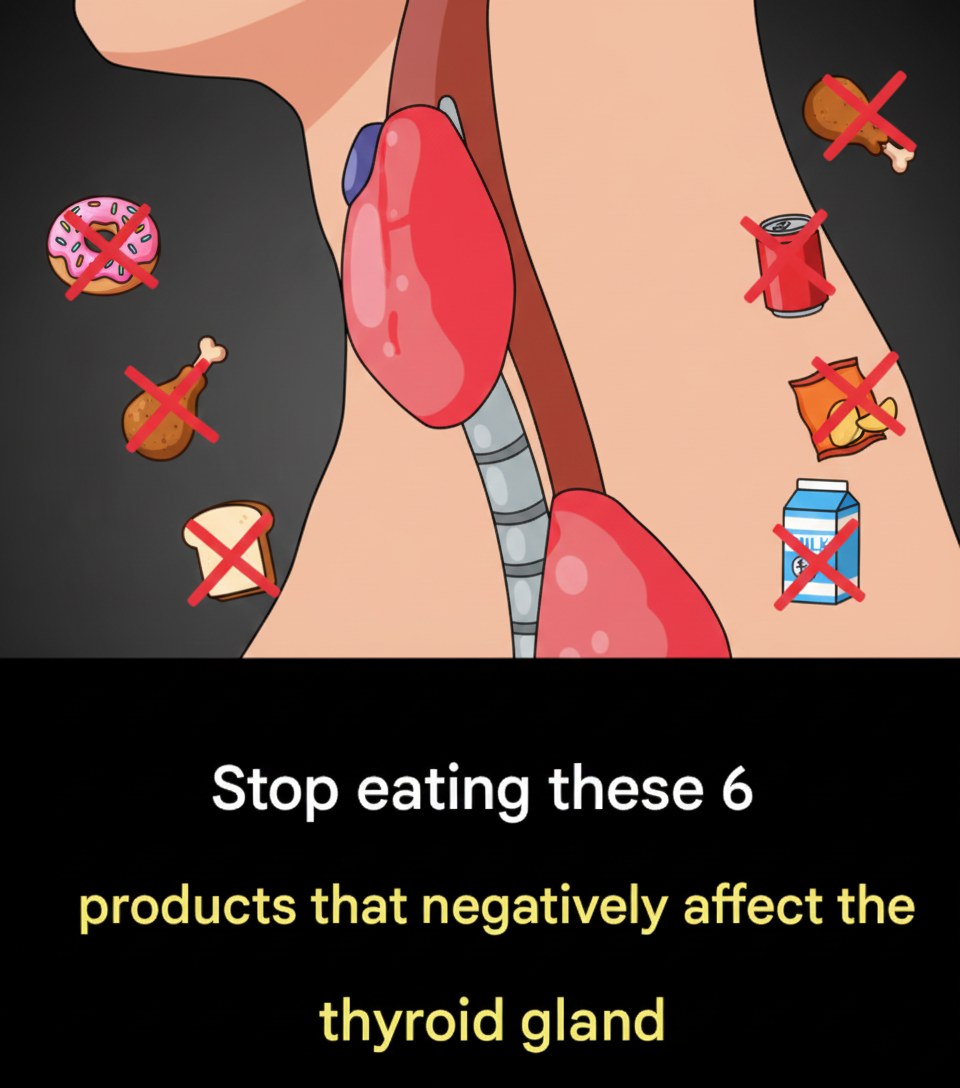
Here are 6 foods that can negatively impact your thyroid—and what to do instead.
❌ 1. Raw vegetables are goitrogenic
Hidden Thyroid Blockers
Food products worth paying attention to:
Raw kale, spinach, broccoli, cabbage, Brussels sprouts, cauliflower, pak choi
These cruciferous vegetables contain goitrogens — compounds that can interfere with iodine absorption by the thyroid gland.
Iodine is essential for the production of thyroid hormones (T3 and T4). Iodine blockage by goitrogens can worsen hypothyroidism and lead to goiter (enlargement of the thyroid gland).
✅ Good news: cooking deactivates most goitrogens . Steaming or boiling cruciferous vegetables reduces their goitrogenic activity by up to 90%.
🟢 Tip: Enjoy these nutrient-rich vegetables—but cook them if you have hypothyroidism. Eat raw vegetables in moderation if you’re healthy and eating a balanced diet.
❌ 2. Soy products (especially unfermented ones)
Hormone Mimic
Food products worth paying attention to:
Soy milk, tofu, edamame, soy protein isolate, soy sauce
Soy contains isoflavones (such as genistein), which are phytoestrogens — plant compounds that can:
According to the American Heart Association (AHA), about 75 percent of patients who had a stroke for the first time have high blood pressure. Because of this correlation, doctors strongly advise patients to focus on lowering their blood pressure to decrease their risk of stroke.
However, lowering your blood pressure is not the only risk factor for stroke. Researchers have discovered a common drink that most people think is healthy is in reality associated with an increased risk of stroke and dementia.
This study was done by scientists from the Boston University School of Medicine in 2017.
The team examined the effect of artificially sweetened beverages (ASBs) on the health of adults over the age of 45 for an extended period. About three thousand participants took part in this study. The team measured their daily beverage consumption via the food-frequency questionnaire for ten years.
The Boston researchers’ result showed that people who drank a minimum of one diet soda a day had two times the risk of stroke compared to the group who did not drink the beverage.
Upon further analysis, the team also found that the diet soda drinkers had a three-times increased risk of experiencing an ischemic stroke attack.
The scientists behind this study noted that their findings add to the growing evidence that suggests ASBs significantly increases a person’s risk of stroke especially ischemic stroke.
There are certain memories that don’t fade with time. They don’t soften or blur at the edges. They stay sharp, almost physical, like you could reach out and touch them. For me, one of those memories starts in a small kitchen, late at night, with a pot of water rattling on the stove.
If you’ve never boiled water just to take a bath, this might sound strange. Maybe even dramatic. But if you have, you already know exactly where this story is going.
Growing up poor isn’t always about not having food or clothes. Sometimes it’s about routines that feel normal when you’re living them, but later in life, you realize how heavy they were. Back then, boiling water wasn’t a symbol of hardship. It was just… what we did.
The house would be quiet. Too quiet. Usually because everyone was tired. The kind of tired that comes from long days, from worrying without saying it out loud. Someone would fill a big metal pot with water and set it on the stove. The flame would flicker underneath, and we’d wait. And wait.
Steam would slowly rise, fogging the air, making the kitchen feel warmer than the rest of the house. There was something comforting about that warmth, even if it came from necessity. When the water finally boiled, it wasn’t the end. It was just the beginning.
That hot water would be carefully carried to the bathroom, mixed with cold water in a tub or bucket, stretched as far as possible so everyone could get clean. No long showers. No letting the water run. Every drop mattered.
At the time, I didn’t think of it as being “poor.” I thought of it as being normal.
Everyone around me lived in a similar way. We shared tips instead of money. How to make hot water last longer. How to reheat it safely. How to wash quickly without wasting anything. It wasn’t survival in the dramatic sense. It was quiet problem-solving, passed down like family wisdom.
But here’s the thing people don’t talk about: those habits don’t disappear when your situation changes.
Even years later, in places with hot water on demand, I still find myself checking the temperature twice. Still feeling a little uneasy letting the shower run too long. Still hearing an inner voice reminding me that hot water is something you earn, not something you waste.
Growing up poor teaches you awareness. Constant awareness.
But if you’re still boiling them in a big pot of plain water…
I hate to say it:
You’re stealing flavor, wasting nutrients, and committing culinary treason against one of the world’s most humble, glorious vegetables. 😱
Yes, boiling is classic. It’s easy. It’s what Grandma did.
But guess what?
That pot of bubbling water isn’t cooking your potatoes—it’s leaching them.
Flavor? Leaked out.
Nutrients? Floating in the broth you pour down the drain.
Texture? Mushy, waterlogged, sad.
So let’s break up with boring boiled potatoes—for good—and discover ways to cook them that make them taste like they were meant to: rich, creamy, deeply savory, and full of soul.
❌ Why Boiling Potatoes in Water Is Doing More Harm Than Good:
Why Boiling Potatoes in Water Is Doing More Harm Than Good
It’s not just “meh.” It’s scientifically underwhelming.
1. Flavor Gets Washed Away
Potatoes have natural sugars and delicious earthiness—but when submerged in water, those delicate flavors dilute fast. The result? Bland, neutral spuds that need a rescue mission of butter and salt.
2. They Absorb Too Much Water
Ever tried roasting boiled potatoes? They steam instead of crisp.
Why? Because they’re already soaked. All that extra moisture fights browning and gives you soggy fries or gluey mash.
3. Vitamins Go Down the Drain
Water-soluble vitamins like vitamin C and B-complex don’t stay put—they escape into the cooking water. And unless you’re drinking that starchy liquid (soup, anyone?), you’re tossing away nutrition.
4. It Wastes Energy & Time
Boiling a large pot of water takes forever. And for what? A soft potato that could’ve been ready faster, tastier, and smarter.
👉 Bottom line: Boiling isn’t wrong—it’s just not the best tool for most jobs.
✅ The Better Ways to Cook Potatoes (No Water Required!)
Say goodbye to soggy spuds and hello to flavor-packed perfection. Try these smarter, tastier methods:
🥄 1. Steam Them – The Gentle Giant
Why it wins: No submersion = no flavor loss. Just tender, clean-tasting potatoes ready for anything.
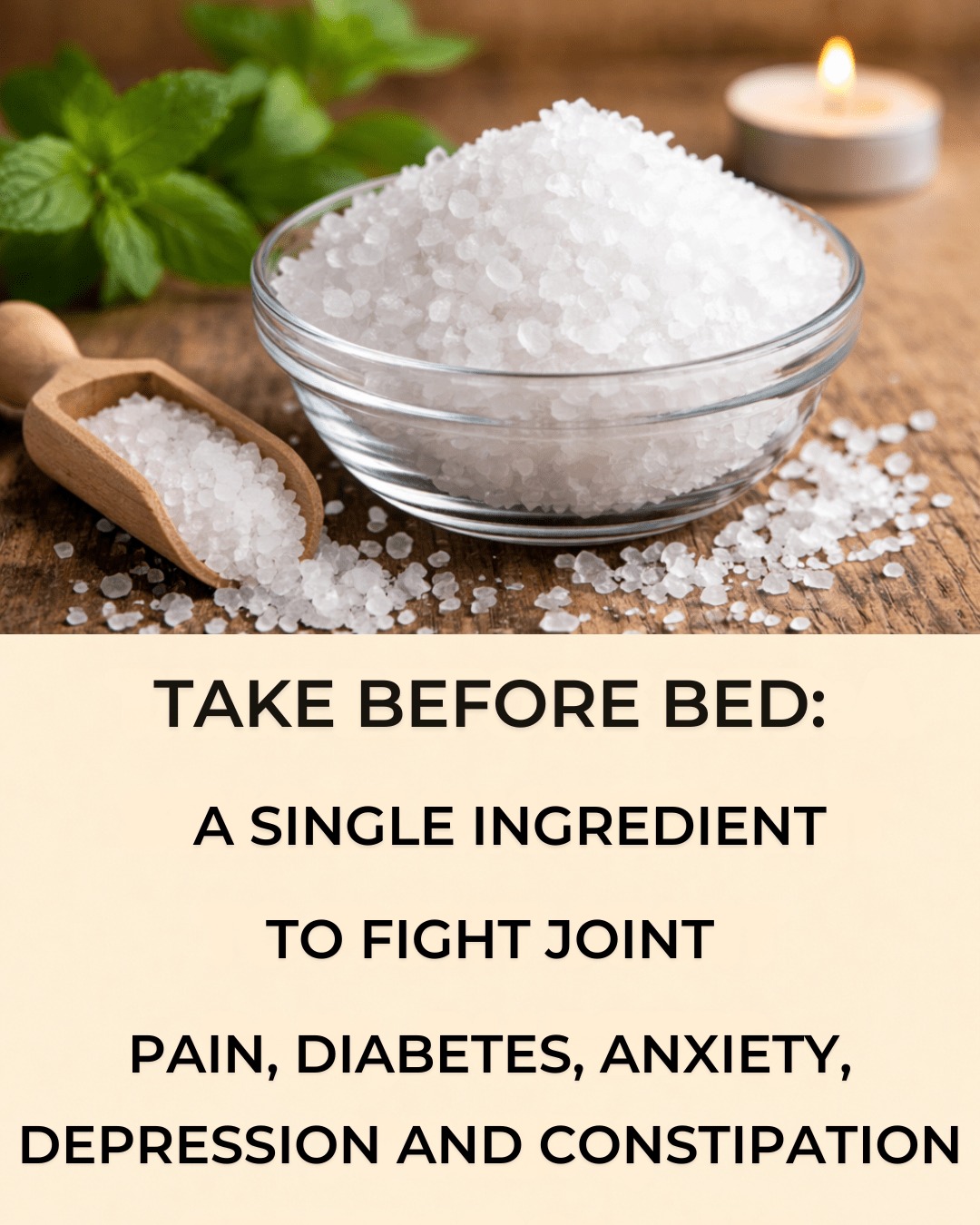
Tossing and turning at night, waking up with stiff muscles, or starting the day feeling drained and foggy can make even simple mornings feel overwhelming. These subtle but persistent issues often stem from everyday stress, poor sleep patterns, or nutrient gaps that build up over time. Magnesium, an essential mineral involved in hundreds of body processes, has gained attention for its potential to promote relaxation and support restful nights when incorporated thoughtfully—especially in the evening. While not a cure for sleep disorders, consistent intake through food or gentle routines may help your body unwind more easily. Curious about the real effects? Let’s explore evidence-based ways it might gently transform your evenings.
Why Magnesium Plays a Key Role in Evening Relaxation
Many adults unknowingly fall short on magnesium due to modern diets low in whole foods, leading to common complaints like muscle tension or restless nights. Studies, including systematic reviews, link better magnesium status to improved sleep quality, such as easier time falling asleep and longer duration. This mineral supports over 300 biochemical reactions, including those that calm the nervous system and aid muscle function. When levels dip, you might notice more nighttime discomfort or grogginess upon waking. Replenishing through natural sources can help restore balance without overpromising dramatic changes.
The good news? Evening focus on magnesium-rich choices aligns with the body’s natural wind-down phase, potentially enhancing relaxation signals like those involving melatonin regulation. Research from sources like the Sleep Foundation and PubMed highlights associations between higher magnesium and better rest, though results vary by individual.
We forget about them, we pile them up at the back of the closet… and yet, these slightly faded sheets contain a treasure trove of practical, economical, and eco-friendly ideas. Want to organize without waste? Consume wisely without spending a fortune? Here’s how to transform your old sheets into true everyday allies. And some ideas might surprise you… Homemade curtains on a budget
Tired of those empty windows or overpriced curtains? A well-chosen sheet, a little sewing, and voilà: custom-made, ultra-decorative curtains. Just add tabs or ribbons and you’re done. A little bonus: choosing a thicker fabric will better insulate your home in both summer and winter.
see the continuation on the next page
Durable, zero-waste shopping bags. Say goodbye to single-use plastic bags! Transform your old sheets into durable shopping bags. A quick sew, two sturdy handles, and you’re ready for the market or supermarket. Plus, these bags are washable, infinitely reusable… and much prettier than you can imagine!
Elegant tablecloths and napkins without spending a fortune
Need a tablecloth for Sunday lunch or a set of napkins to entertain guests? A patterned sheet, a few hems, and you’ll have a personalized tablecloth. For an even more “wow” touch, add embroidery or a little fabric paint: a guaranteed country look.
Update your decor without buying everything. Want to update your pillows without spending a fortune? Use your sheets to create new pillowcases. Cut, sew, and your living room will transform! A great decorating tip for those who love changing with the seasons.
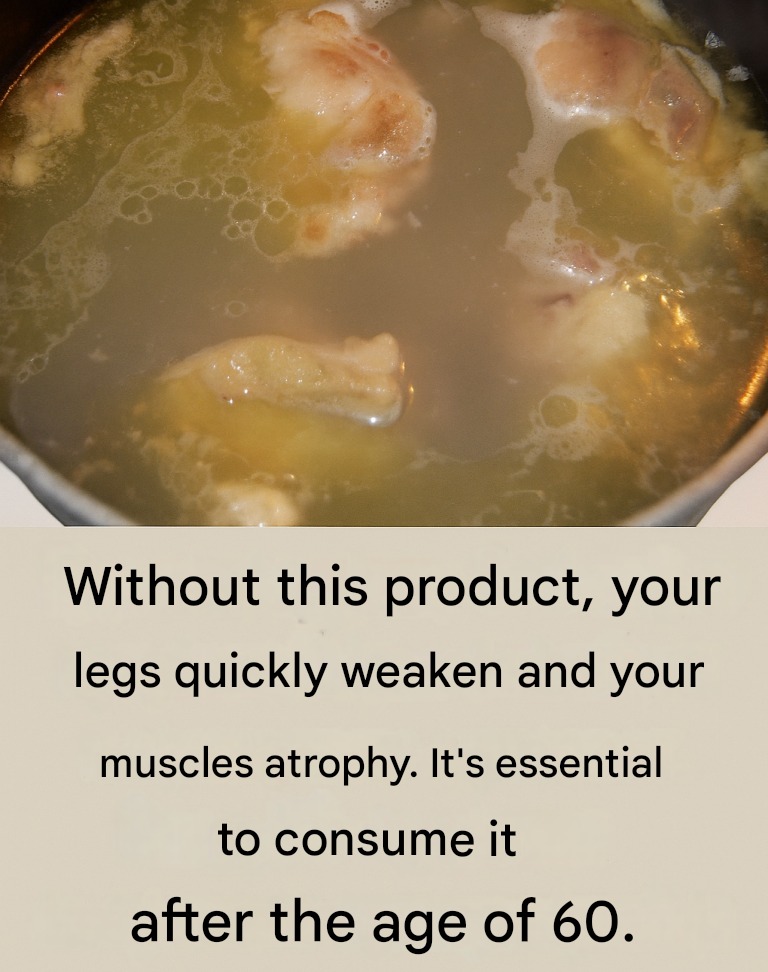
I’ve always been a strong man—a carpenter by trade. My arms and legs are my tools. Without them, I’m nowhere. But a few years ago, I started feeling something strange. My trusty “tools” began to betray me.
My legs felt heavy as lead. My knees were weak, drained of strength. Lifting the bag of cement I used to throw with one hand? It was already difficult! My muscles began to atrophy, and I felt myself turning into a frail old man.
It was terrifying. The doctors just shrugged: “It’s a matter of age, Viktor Ivanovich. It’s sarcopenia. Take vitamins, move more.” But what good are vitamins when my legs can barely hold me up?! I felt it wasn’t just age. Something deeper was going on.
I started digging – I talked to old athletes, read scientific articles and wondered: what did our grandparents eat who were still chopping wood at the age of 80?
And then I found the answer.
I discovered a product we’ve all unfairly forgotten about. Today I’ll tell you about my personal discovery. I learned about this product by accident, but it helped me regain strength in my legs, rebuild lost muscle, and feel ten years younger.
Without it, my legs would have given up long ago.
Get ready for a surprise – it’s not what you think…
The Solution: Why Muscles Melt and How to Save Them
The main enemy of our muscles is the “invisible thief” after age 60. Unconsciously, after age 60, we lose 1-2% of our muscle mass per year. This phenomenon is called sarcopenia . And it’s not just an aesthetic problem.
This leads to weakness, loss of balance, and a greater risk of falls and fractures.
Doctors say the cause is hormonal changes and a sedentary lifestyle. True. But there’s another, less obvious reason, which I discovered during my little “investigation.”
Imagine your muscles are a brick wall. Every day, one brick is removed, but a new one isn’t. At some point, the wall will collapse!
And the “building blocks” for muscles are proteins. But not all proteins are created equal. It’s important not only to consume protein, but also to choose the kind that the body can absorb at our age.
My discovery: a forgotten product that gave me back my strength
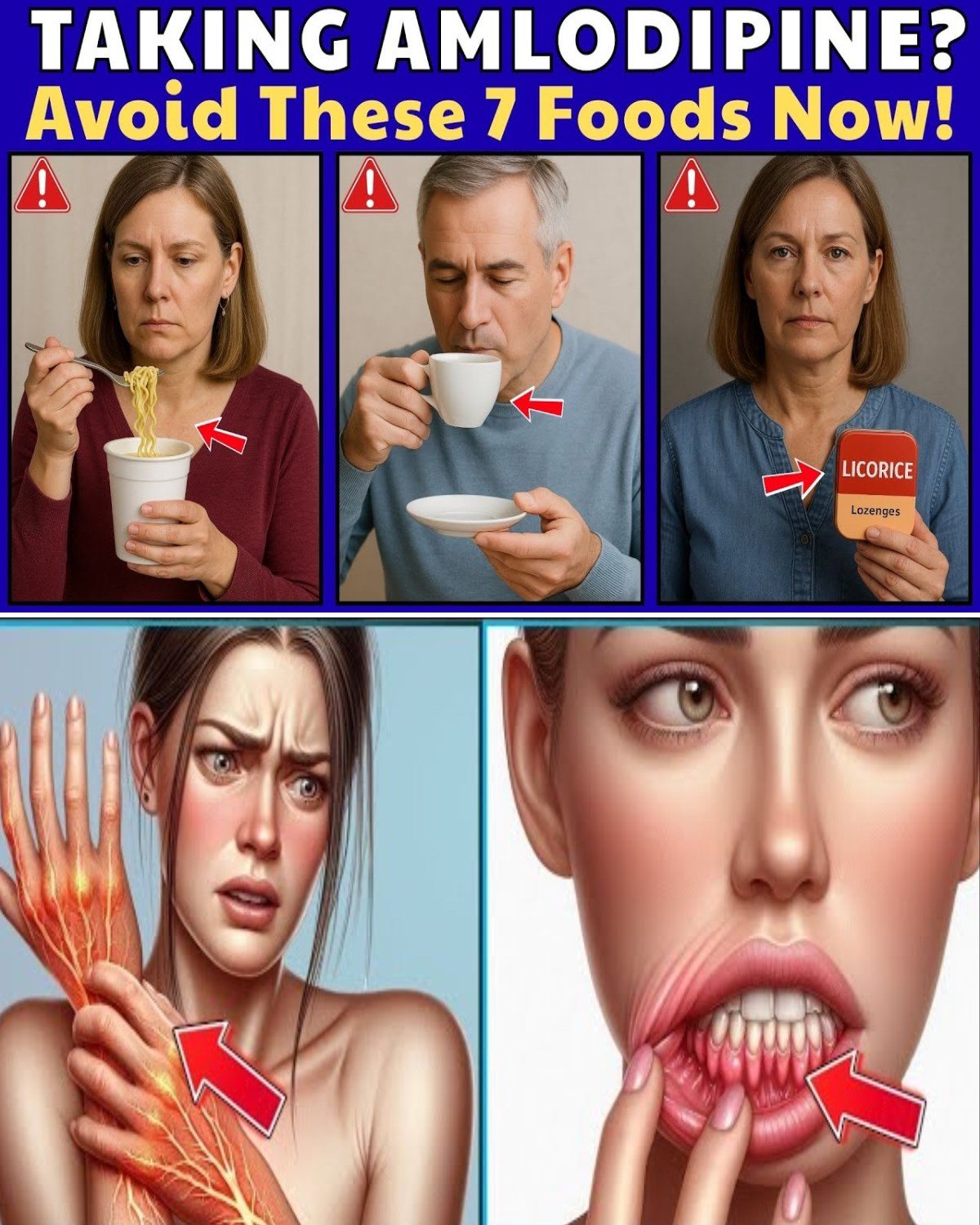
Imagine popping your daily amlodipine pill, hoping for steady blood pressure control, only to feel that nagging dizziness creep in after a simple meal. You’re not alone—millions manage hypertension with this common medication, yet subtle dietary choices might intensify those uncomfortable flushes or swells. What if the tart tang of your morning juice or the salty crunch of your favorite snack is quietly working against you? Picture the frustration of unexplained fatigue, all while trying to stay on top of your health. In this exploration, we’ll uncover hidden culprits that research suggests may heighten amlodipine’s side effects, sparking curiosity about your plate. But hold on—what everyday items could be stirring the pot? Let’s dive in and reveal how awareness might help you navigate smoother days.
Amlodipine, a go-to calcium channel blocker for high blood pressure, often brings relief but can come with side effects like swelling, headaches, or lightheadedness. These issues affect up to 10% of users, per studies, turning routine days into battles with discomfort. Ignoring potential food interactions might exacerbate these, leaving you wondering why symptoms persist despite following your regimen.
The real kicker? Everyday eats could quietly boost the drug’s concentration in your blood, amplifying those woes without warning. Have you ever felt extra flushed after a seemingly innocent treat? This isn’t just coincidence—it’s a call to examine your diet closer.
What if skipping certain foods could ease your experience? But first, let’s build the suspense: these aren’t exotic villains, but familiar favorites hiding in plain sight.
Understanding Amlodipine and Its Common Challenges
You start your day with energy, but by afternoon, your ankles swell like balloons after a salty lunch. Amlodipine helps relax blood vessels, yet side effects can disrupt this balance. Research shows these may worsen with certain interactions, turning minor annoyances into daily hurdles.
Picture Sarah, a 52-year-old teacher, who loved her routine until persistent dizziness sidelined her. Before, she felt vibrant; after noticing patterns, adjustments brought back her spark. Could your story mirror hers?
The Hidden Impact of Dietary Choices
Foods aren’t just fuel—they interact with meds in ways that surprise many. Studies indicate some can slow drug breakdown, spiking levels and side effects. This isn’t about blame, but empowerment through knowledge.
You might think, “My diet’s fine,” but subtle shifts could make a difference. Ready for the countdown? We’ll reveal seven foods, starting from the least obvious, each with insights to ponder.
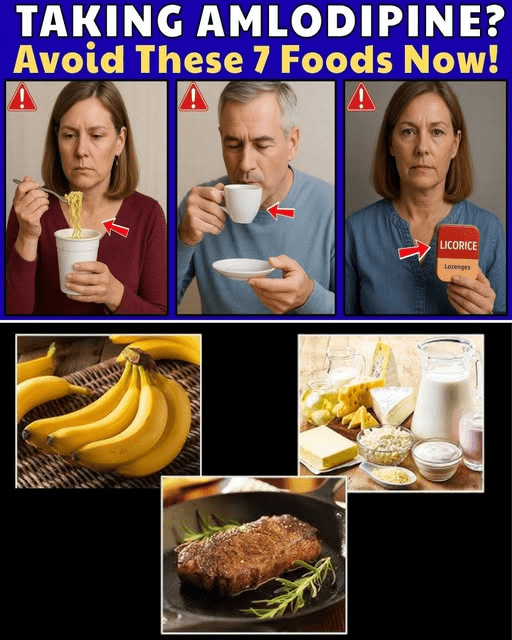
Number 7: Potassium-Rich Bananas
Envision biting into a creamy banana, its sweet aroma filling the kitchen, only to later feel your heart race unevenly. Bananas, packed with potassium, might not directly clash with amlodipine, but for those on blood pressure meds, excess potassium could contribute to irregularities if levels build up.
Research from the American Heart Association notes that while amlodipine doesn’t deplete potassium like some diuretics, combining it with high-potassium foods may heighten risks in sensitive individuals. One study observed subtle heart rhythm changes in participants with elevated intake.
Meet John, a 58-year-old retiree, who adored his daily smoothies. He battled fatigue and mild palpitations until dialing back—now, he reports feeling steadier, with renewed morning walks. But you might wonder, is this overblown? Not entirely; moderation could be key. And wait, the next one involves a common herb that packs a punch…
Number 6: Licorice Candy or Tea
That chewy black licorice twist, with its distinct anise scent, might seem harmless, but its glycyrrhizin compound can mimic hormones, potentially lowering potassium and raising blood pressure. For amlodipine users, this could intensify swelling or headaches, as studies in the Journal of Clinical Hypertension suggest.
A review found that even moderate licorice consumption might amplify side effects by disrupting electrolyte balance. Imagine savoring a cup of licorice tea, feeling relaxed, yet waking to puffy eyes.
Sarah, our teacher from earlier, indulged in licorice drops for stress relief. Pre-change, she endured constant bloating; post-awareness, lighter choices lifted her mood. You could be thinking, “I rarely eat it,” but occasional treats add up. Hold tight—the following food hides in many kitchens and could surprise you more…
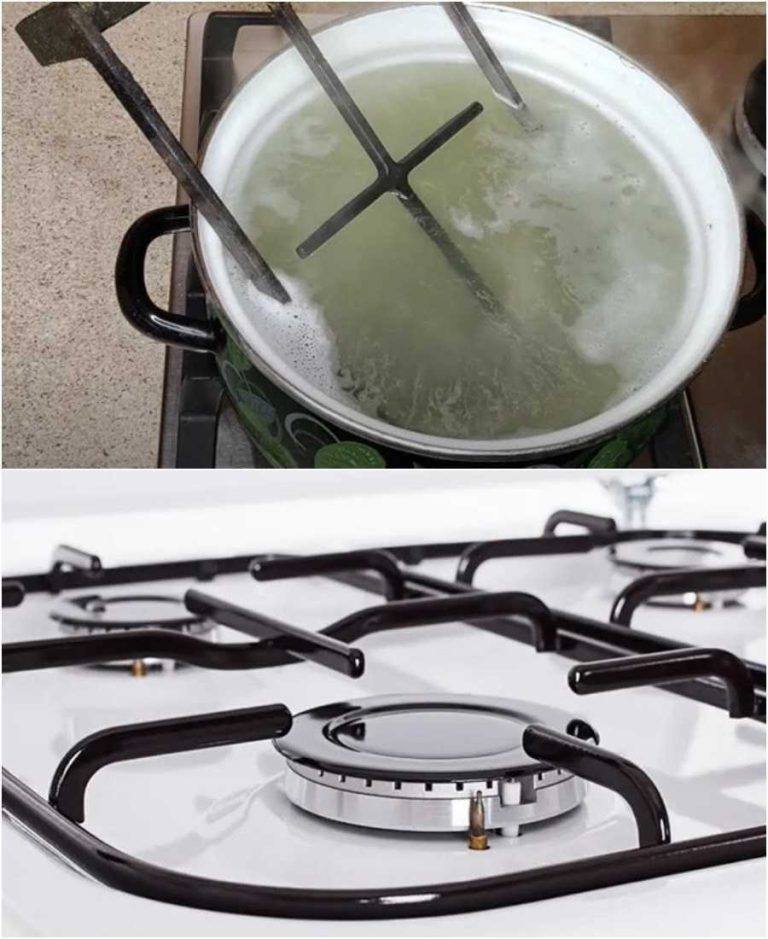
A thick layer of carbon deposits gradually forms on the grate of a gas stove, which cannot be removed by conventional means. To maintain order in my kitchen, I have been using one product for several years now that allows me to quickly deal with soot and grease. I have a cast iron grate, but this method will also work for products made of other metals.
Dishwasher tablet – universal detergent
Continue reading…
First you need to take a pan that will fit the grill, fill it with water and put it on the fire. Add two dishwasher tablets to the water. The water should boil, then put a wire rack in the pan and let the water boil for about half an hour.
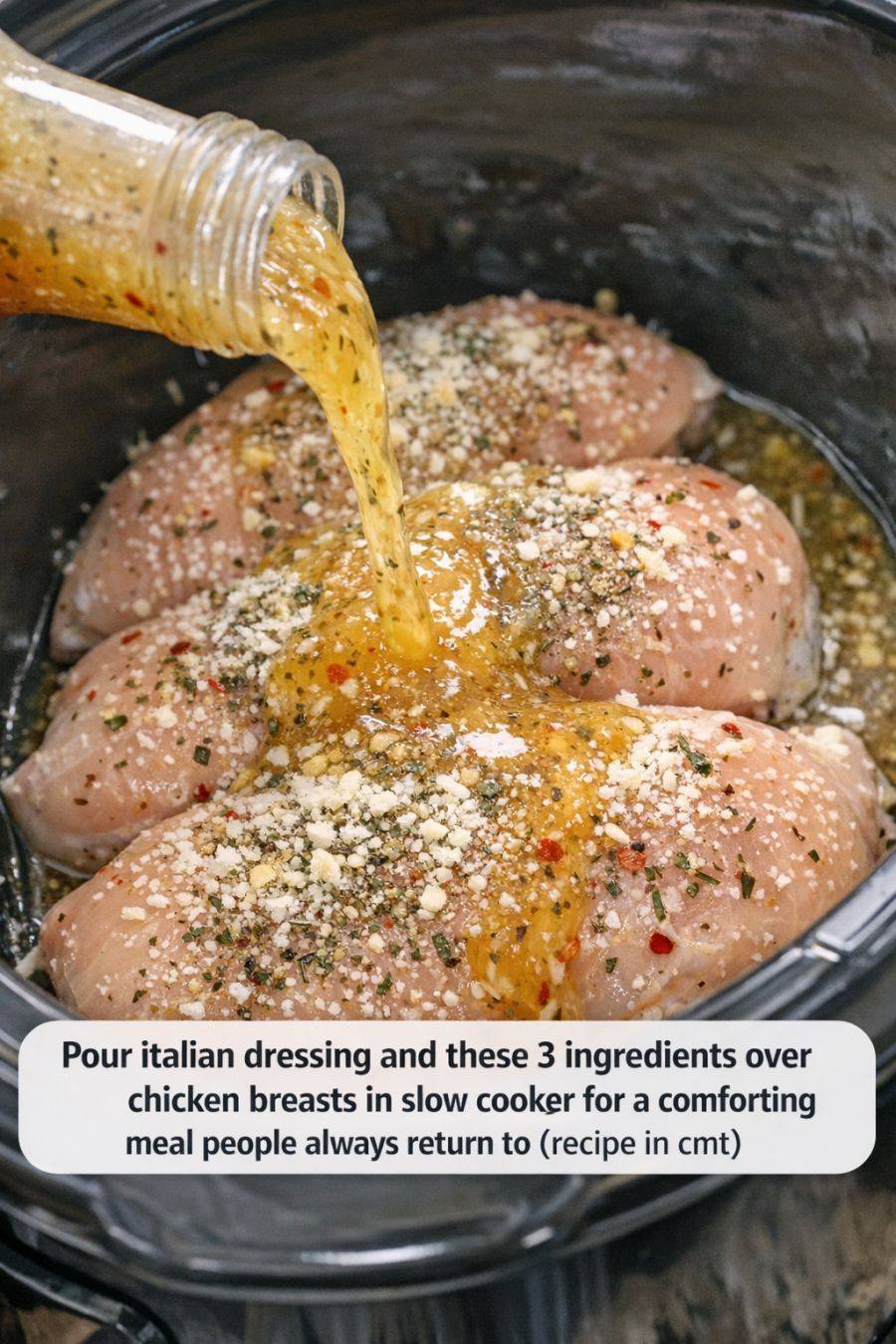
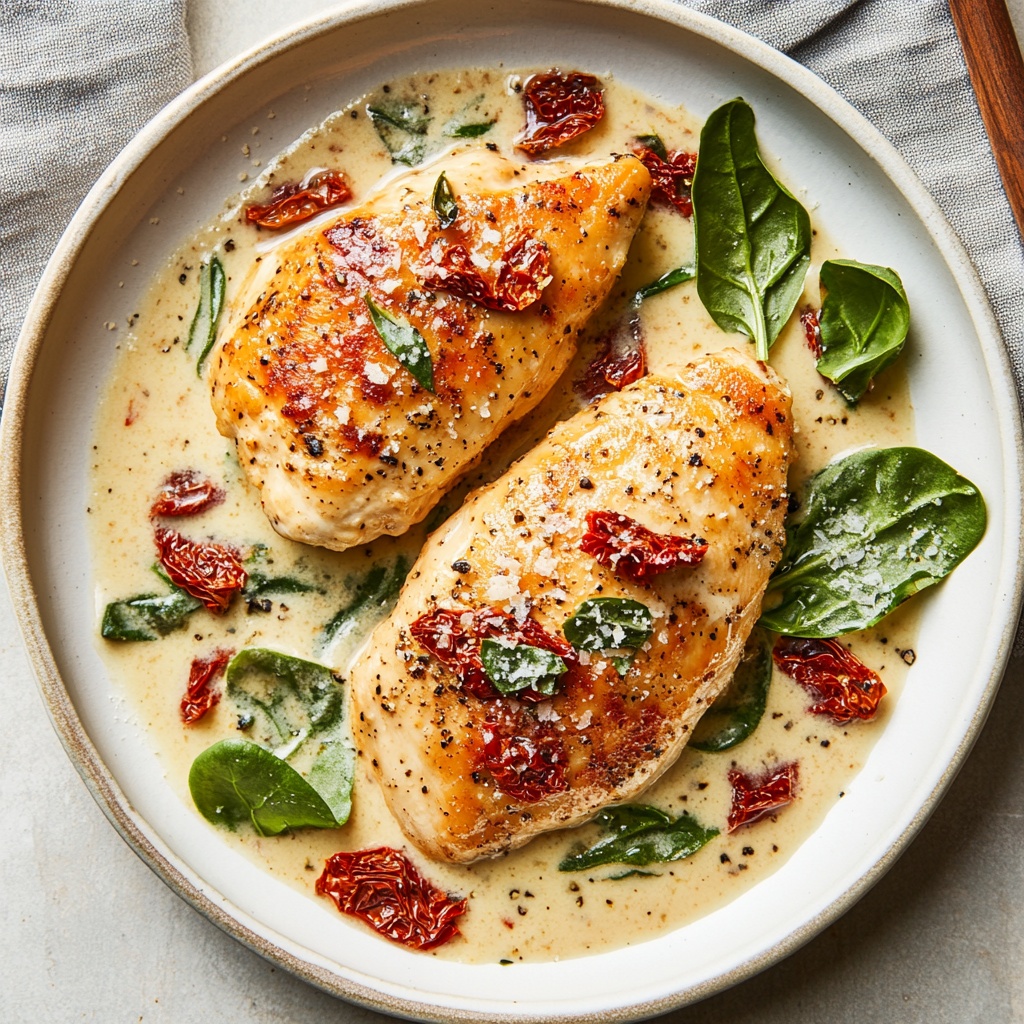
This 4-ingredient creamy Italian chicken is one of those weeknight recipes that feels almost too easy for how comforting and flavorful it turns out. It leans on a very American pantry classic: bottled Italian dressing. While this isn’t a traditional Italian dish by any stretch, it’s inspired by Italian-American flavors—herbs, garlic, and tangy vinegar—tempered with the richness of cream cheese. The slow cooker does all the work, gently braising boneless skinless chicken breasts until they’re fork-tender and infused with the dressing. It’s a great option for busy days when you want a home-cooked meal without hovering over the stove, and it’s mild enough to please picky eaters while still interesting for those of us who like a bit of culinary nostalgia.
This creamy Italian chicken is wonderfully versatile, so think of it as a sauce-plus-protein situation. It’s especially good spooned over hot buttered egg noodles or a bed of fluffy mashed potatoes, which soak up that tangy, savory cream sauce. If you prefer something lighter, serve it over steamed rice or a simple bed of sautéed spinach or zucchini. A crisp green salad with a lemony vinaigrette or a side of roasted vegetables—like broccoli, green beans, or carrots—adds freshness and balances the richness of the dish. Warm crusty bread or garlic bread on the side is also a smart idea; you’ll want something to swipe through every last bit of sauce.





 Why Magnesium Plays a Key Role in Evening Relaxation
 Common Signs That Might Point to Low Magnesium