“Fresh.”
“Farm-raised.”
“All-natural.”
“Butcher cut.”
Supermarkets are very good at making meat look wholesome, local, and lovingly prepared. Carefully lit display cases, rustic fonts, pastoral imagery, and reassuring buzzwords all send the same message: this meat is exactly what you think it is.
But here’s the uncomfortable truth:
Much of the meat sold in supermarkets is not what most consumers assume it is.
That doesn’t mean it’s unsafe.
It doesn’t mean it’s fake.
And it doesn’t mean supermarkets are breaking the law.
What it does mean is that modern meat production is far more industrial, complex, and cleverly marketed than most shoppers realize.
Let’s pull back the curtain.
The Illusion of the “Local Butcher” Experience
Walk into a supermarket and head to the meat department. You’ll often see:
- Staff in butcher coats
- Wooden décor
- Words like “hand-cut,” “butcher-trimmed,” or “fresh daily”
It feels personal. Traditional. Almost nostalgic.
But in most large supermarkets, very little meat is actually cut on-site.
What Really Happens
- Meat is processed at centralized facilities
- Cuts arrive vacuum-sealed, boxed, and pre-trimmed
- Store staff unwrap, portion, and repackage
- Labels and trays create the appearance of in-store butchery
This doesn’t make the meat bad — but it does mean the image being sold is often more marketing than reality.
Where Supermarket Meat Usually Comes From
Most supermarket meat comes from large-scale industrial producers, not small local farms.
Industrial Meat Production
- Animals are raised in high-volume systems
- Processing happens at massive centralized plants
- Meat is distributed nationally or regionally
- Efficiency and consistency are prioritized
This is how supermarkets keep prices low and shelves stocked year-round.
Local farms do exist — but they supply a tiny fraction of supermarket meat unless explicitly stated and verified.
“Fresh” Doesn’t Mean What You Think It Means
One of the most misleading words in the meat department is “fresh.”
Legally, “Fresh” Means
- The meat has never been cooked
- It may have been refrigerated for weeks
- It may have been previously frozen and thawed (depending on labeling rules)
It does not mean:
- Recently slaughtered
- Locally sourced
- Never frozen
- Recently cut
That steak labeled “fresh” could be weeks old, having traveled hundreds or thousands of miles.
Why Meat Looks So Red (And Why That Can Be Misleading)
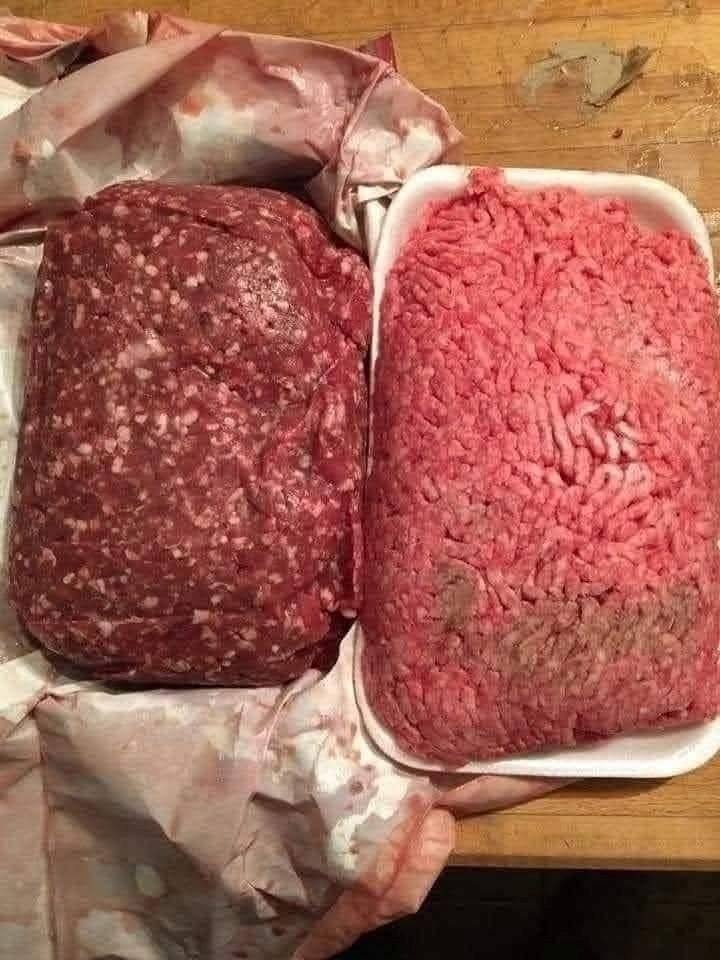
Bright red meat looks appealing. Supermarkets know this — and they use science to make it happen.
Oxygen and Color
- Meat naturally turns brown as it ages
- Exposure to oxygen turns it bright red
- Modified-atmosphere packaging preserves color
This doesn’t necessarily improve freshness — it improves appearance.
Some meats are even packaged in oxygen-rich environments specifically to maintain that “just cut” look.
The Truth About “All-Natural” Meat
“All-natural” sounds reassuring — but it’s one of the least regulated terms in food marketing.
What It Usually Means
- No artificial ingredients added after processing
- Minimal processing (loosely defined)
What It Does NOT Guarantee
- Humane treatment
- Antibiotic-free farming
- Grass-fed diets
- No hormones (especially in beef, where hormones may still be allowed)
“All-natural” often describes processing, not how the animal lived.
“No Antibiotics Ever” vs. “Raised Without Antibiotics”
These labels look similar — but they can mean different things.
- “No antibiotics ever” usually means the animal never received antibiotics
- “Raised without antibiotics” may still allow treatment if the animal becomes sick (depending on certification)
Animals that require antibiotics for illness are often removed from certain label programs — not because antibiotics are bad, but because labeling rules demand it.
Ironically, this can create welfare dilemmas.
Hormones: Another Area of Confusion
Hormone use varies by animal and country.
Key Facts
- Hormones are not allowed in poultry or pork in many regions
- Beef may still use growth hormones depending on regulations
- Labels like “hormone-free” are sometimes redundant or misleading
Supermarkets often highlight “no hormones” even when hormones were never allowed in that meat category to begin with.
The Reality of “Grass-Fed” Claims
Grass-fed beef is increasingly popular — but not all grass-fed claims are equal.
Grass-Fed Can Mean
- Grass-fed for part of life
- Grass-fed but grain-finished
- Grass-fed but raised in feedlots later
Unless it says “100% grass-fed and finished,” the animal likely consumed grain at some stage.
Why Supermarkets Love Vague Language
Marketing thrives in the gray areas.
Words like:
- Farm-raised
- Wholesome
- Traditional
- Premium
- Artisan
These terms:
- Sound meaningful
- Are emotionally reassuring
- Are often legally undefined
They’re designed to make you feel good — not to inform you precisely.
The Economics Behind Supermarket Meat
Supermarkets operate on thin margins.
To stay profitable, they rely on:
- Large suppliers
- Long shelf life
- Consistent appearance
- Predictable pricing
This encourages:
- Centralized processing
- Standardized cuts
- Packaging techniques that extend display time
Again — this isn’t inherently bad. It’s just industrial food reality.
Why Meat Is Often Injected or “Enhanced”
Some meats contain added solutions — often saltwater.
Why This Happens
- Improves juiciness
- Enhances flavor
- Increases weight (and profit)
- Reduces cooking loss
Labels may say:
- “Enhanced with up to X% solution”
- “Contains added water”
Many shoppers never notice.
The Freezing Nobody Talks About
Much supermarket meat has been frozen at some point — especially imported or seasonal products.
Freezing:
- Extends shelf life
- Stabilizes supply
- Allows long-distance transport
When properly done, freezing is safe — but it contradicts the “fresh from the farm” image.
Why “Sell By” Dates Aren’t About Safety
Sell-by dates help stores manage inventory — not protect consumers.
Meat can be:
- Safe after the sell-by date
- Unsafe before it, if mishandled
Smell, texture, and storage matter more than printed dates.
Is Supermarket Meat Unsafe?
No.
Supermarket meat is generally safe, regulated, and inspected.
The issue isn’t safety — it’s expectation vs. reality.
People often believe they’re buying:
- Small-farm meat
- Recently butchered cuts
- Minimal processing
When they’re actually buying:
- Industrially produced meat
- Centrally processed
- Strategically marketed
How to Be a Smarter Meat Shopper
You don’t need to stop buying supermarket meat — just shop with awareness.
Read the Fine Print
Look beyond the front label. Read ingredient lists and processing notes.
Ask Questions
Some stores do source locally — but you have to ask.
Understand Labels
Learn which certifications actually mean something (USDA organic, animal welfare certifications, etc.).
Use Local Sources When Possible
Butchers, farmers’ markets, and CSAs offer transparency — often at a higher price, but with clarity.
Why This Matters
Food shapes health, culture, and trust.
When marketing replaces transparency, consumers lose the ability to make informed choices — not because they don’t care, but because the system is designed to be confusing.
Understanding where meat comes from empowers people to:
- Choose intentionally
- Spend wisely
- Align purchases with values
The Bottom Line
Supermarkets aren’t necessarily lying — but they’re not telling the full story either.
The meat isn’t fake.
It isn’t illegal.
It isn’t secretly dangerous.
But it is:
- Industrial
- Strategically marketed
- Designed to look more “traditional” than it is
Once you see the system clearly, you can shop without illusion — and without fear.
Final Thoughts
The goal isn’t outrage.
It’s awareness.
When you understand how supermarket meat is produced, packaged, and marketed, you stop being surprised — and start making choices on your terms.
Food doesn’t need to be perfect.
But it should be honest.
