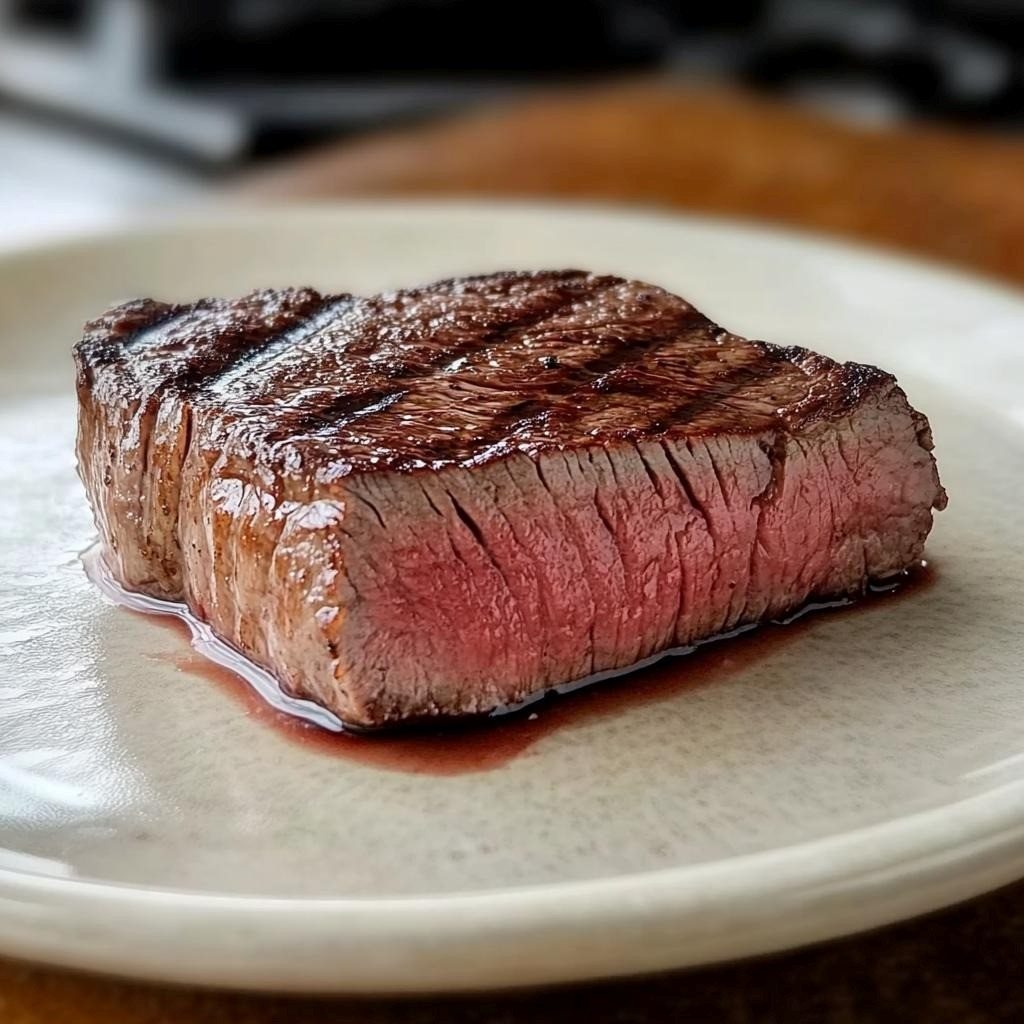
What the Red Juice in a Rare Steak Really Is (And Why It’s Not Blood)
Few food myths are as stubborn—or as widespread—as the belief that the red liquid pooling on a plate beneath a rare steak is blood. For many diners, this misconception is enough to make them uncomfortable ordering anything less than well-done. Others shrug it off but still quietly wonder: Is that really blood?
The short answer is no.
The long answer? It’s far more interesting.
In this deep dive, we’ll uncover exactly what that red juice is, why it appears more prominently in rare steaks, how cooking affects it, and why understanding it can completely change how you think about meat, cooking, and flavor. Along the way, we’ll explore meat science, muscle biology, food safety, and even a bit of culinary history.
By the end, you’ll not only know the truth—you’ll be able to confidently explain it the next time someone pushes away a pink steak in fear.
The Persistent Myth: “That Steak Is Bloody”
Let’s start with where the myth comes from.
When you cut into a rare steak, a red or pink liquid often seeps out onto the plate. Visually, it resembles blood. Our brains make a quick association: red liquid + meat = blood. Simple, right?
But that assumption overlooks a crucial fact:
Meat sold in stores has already been drained of blood.
During the slaughtering process, animals are thoroughly bled. This isn’t optional—it’s a fundamental step in meat processing for both quality and safety. Blood spoils quickly, affects flavor, and is removed long before meat reaches a butcher’s counter or grocery store shelf.
So if it’s not blood, what is it?
The Real Answer: It’s Myoglobin (Mostly)
The red juice you see in a rare steak is primarily a mixture of water and a protein called myoglobin.
What Is Myoglobin?
Myoglobin is a protein found in muscle tissue. Its job is to store and transport oxygen within muscle cells, helping muscles function during movement. Think of it as a kind of oxygen reserve for muscle fibers.
Here’s why myoglobin matters:
- It gives raw meat its red or pink color
- It plays a huge role in how meat looks when cooked
- It affects flavor and perceived juiciness
Unlike blood, myoglobin is inside muscle cells, not circulating through veins. Once the animal is processed and the blood is removed, myoglobin remains—because it’s part of the muscle itself.
Why Is the Liquid Red If It’s Not Blood?
Great question—and this is where chemistry comes in.
Myoglobin contains iron, which binds to oxygen. Depending on how much oxygen is present and how the meat is cooked, myoglobin can appear:
- Purplish-red (deoxymyoglobin, low oxygen)
- Bright red (oxymyoglobin, exposed to oxygen)
- Brown or gray (metmyoglobin, fully cooked)
When you cut into a rare steak, the myoglobin hasn’t been fully denatured by heat. It still retains its red or pink color, and when combined with water naturally present in muscle tissue, it forms that familiar reddish juice.
So what you’re seeing is essentially:
Water + myoglobin = red juice
No blood involved.
Why Rare Steaks Have More Red Juice
The doneness of a steak dramatically affects how much of this juice you’ll see.
Rare Steak
- Internal temperature: ~120–125°F (49–52°C)
- Myoglobin remains mostly intact
- Muscle fibers are relaxed
- Water stays inside the meat
Result: Lots of visible red juice
Medium Steak
- Internal temperature: ~135–145°F (57–63°C)
- Some myoglobin denatures
- Muscle fibers tighten
- More moisture is pushed out during cooking
Result: Pinkish juices, less volume
Well-Done Steak
Continued on the next page
- Internal temperature: 160°F+ (71°C+)
- Myoglobin fully denatured
- Muscle fibers contract tightly
- Most moisture expelled
Result: Little to no visible juice, gray-brown meat
The red juice doesn’t disappear because it’s “cooked away”—it disappears because the protein structure changes and moisture is lost.
Why Well-Done Steak Is Drier (And It’s Not Just Overcooking)
Many people assume well-done steak is dry simply because it’s “overcooked.” While that’s partly true, the real reason lies in muscle fiber behavior.
As meat cooks:
- Proteins denature (unfold)
- Muscle fibers contract
- Water is squeezed out
At higher temperatures, muscle fibers tighten like wringing out a sponge. The longer and hotter the cook, the more moisture is expelled. That moisture includes water mixed with myoglobin—hence less juice on the plate and a drier texture in the mouth.
Rare and medium-rare steaks retain more moisture because the muscle fibers haven’t tightened as much.
Is the Red Juice Safe to Eat?
Yes. Completely safe.
The red juice in a steak poses no food safety risk on its own. What matters for safety is temperature, not color or juice.
Key Food Safety Facts
- Bacteria live on the surface of whole cuts of beef, not deep inside
- Searing kills surface bacteria
- The interior of a steak can be rare and still safe to eat
This is why a rare steak is considered safe when properly handled, while ground beef (which mixes surface bacteria throughout) must be cooked thoroughly.
The red juice may look alarming to some, but it’s simply part of the meat’s natural composition.
Why Some Steaks Look Redder Than Others
Not all steaks are created equal. Several factors affect how red a steak looks and how much juice it releases.
1. Cut of Meat
Muscles that work harder (like legs or shoulders) contain more myoglobin.
- High myoglobin cuts: chuck, brisket
- Lower myoglobin cuts: tenderloin, ribeye
More myoglobin = darker red meat.
2. Animal Age
Older animals have more myoglobin. Veal, for example, is paler than beef because the animals are younger.
3. Oxygen Exposure
Meat exposed to air becomes brighter red due to oxygen binding with myoglobin. This is why meat in grocery stores often looks vividly red shortly after being unpackaged.
4. Packaging
Vacuum-sealed meat may look darker or purplish at first. Once exposed to air, it “blooms” into a brighter red.
Why the Juice Sometimes Looks Pink, Not Red
That pinkish hue is a result of dilution and partial denaturation.
As meat cooks:
- Some myoglobin breaks down
- Water is released
- The remaining pigment appears lighter
This is why medium steaks often release pink juice rather than deep red. It’s the same substance—just altered by heat.
Culinary Perspective: Why Chefs Love That Juice
In professional kitchens, that red juice is often considered a sign of quality.
Juiciness Equals Flavor
Water carries flavor compounds. When a steak retains moisture, it tastes richer and more succulent.
Texture Matters
Rare and medium-rare steaks feel more tender because the muscle fibers haven’t tightened excessively.
Visual Appeal
A pink or red interior is often associated with proper cooking technique and respect for the ingredient.
For chefs, the presence of that juice isn’t a flaw—it’s a feature.
Why Resting a Steak Changes the Juice
If you’ve ever cut into a steak immediately after cooking and watched liquid flood the plate, you’ve seen the importance of resting.
What Happens During Resting
- Muscle fibers relax
- Internal pressure equalizes
- Juices redistribute throughout the meat
After resting, less juice spills out when you cut into the steak—not because there’s less juice, but because it’s better retained inside the meat.
This is why rested steaks appear juicier when eaten, even if they leak less on the plate.
Is Red Juice the Same as “Pink Slime”?
No—and this is a crucial distinction.
“Pink slime” refers to a processed meat product made from beef trimmings treated with ammonia. It has nothing to do with natural steak juices or myoglobin.
The confusion comes from color alone, but scientifically and culinarily, they’re unrelated.
Cultural Attitudes Toward Rare Meat
Different cultures have different comfort levels with rare meat.
- France: Rare and medium-rare are standard
- United States: Mixed preferences, with lingering safety myths
- Japan: Celebrates raw and lightly cooked beef (wagyu, tataki)
- UK: Traditionally leaned well-done, now shifting
Understanding what the red juice actually is has helped shift perceptions over time, especially as food education improves.
Does Freezing Affect the Red Juice?
Yes—freezing can change how much juice you see.
When meat freezes:
- Ice crystals form inside muscle cells
- Cell walls rupture
- More liquid is released upon thawing and cooking
This can lead to more visible juice, even if the steak isn’t particularly rare.
Why Some People Still Feel Uneasy
Even with the science explained, emotional reactions matter. Food preferences are deeply personal, shaped by culture, upbringing, and experience.
If someone prefers well-done steak, that’s valid. But it’s equally valid to point out that the red juice:
- Is not blood
- Is not unsafe
- Is a natural part of muscle tissue
Knowledge empowers choice without judgment.
How to Explain This Simply at the Table
If someone asks—or grimaces—here’s a simple explanation:
“That’s not blood. It’s water mixed with a protein called myoglobin, which stores oxygen in the muscle. The animal was drained of blood long before cooking.”
Short, accurate, and reassuring.
Why This Myth Refuses to Die
Visual cues are powerful. Red liquid triggers instinctive reactions. Add decades of misinformation, overcooked steaks marketed as “safe,” and the myth becomes deeply ingrained.
But myths fade when replaced with understanding.
Final Thoughts: Red Juice Is a Sign of Respect
The red juice in a rare steak isn’t something to fear. It’s a sign that the meat:
- Was cooked gently
- Retained its moisture
- Preserved its natural proteins
- Will likely be tender and flavorful
Understanding what it really is transforms hesitation into appreciation. Instead of seeing “blood,” you begin to see biology, chemistry, and craftsmanship working together.
So the next time you cut into a rare steak and see that red juice pool on the plate, you’ll know the truth—and maybe even savor it a little more.
